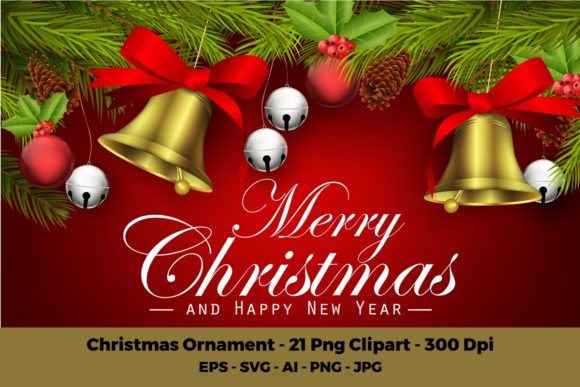
Christmas Cards Vector Graphics & Illustrations Review
I recently opened a new folder for a seasonal branding campaign for a local boutique specializing in handmade holiday goods. The client needed visuals that felt warm, nostalgic, yet polished enough for high-end packaging and social media marketing. I started browsing the creative marketplace for a graphic design asset that could anchor this project without requiring me to build every element from scratch. That is when I found Christmas Cards Vector Illustrations. As a professional designer who has reviewed hundreds of assets for real client work, my first instinct is always to test how these files hold up under pressure. Does the style match the brand identity? Are the lines clean enough for print? Can it scale?
First Impressions: Mood and Visual Style
The moment I imported Christmas Cards Vector Illustrations into my workspace, the visual mood became clear. This collection leans heavily into a classic, festive aesthetic with intricate details that evoke a sense of tradition. It is not the stark, minimalist style often seen in modern corporate tech branding; instead, it feels like a curated set of hand-drawn elements perfect for a handmade business or a family-oriented event planner.
For a client launching a line of holiday greeting cards or organizing a winter wedding, this asset provides an immediate emotional connection. The illustrations feature rich textures and organic shapes that suggest warmth and celebration. When placed against a cream-colored background, the graphics pop with a vintage charm that instantly elevates the perceived value of the product. However, as a designer, I know that "pretty" is not enough; the asset must be functional. I immediately began evaluating how these Illustrations would perform across different mediums, from digital screens to physical packaging.
Performance in Real-World Design Scenarios
In my experience, the true test of any digital product lies in its versatility. I tested Christmas Cards Vector Illustrations across several scenarios relevant to small business owners and content creators. For packaging design, the vector nature of the files allowed me to wrap complex patterns around 3D box mockups without losing resolution. The details held up beautifully on a die-cut sticker sheet, proving that this is a robust sticker design resource.
I also explored its potential for social media graphics. Creating a cohesive Instagram feed for the holiday season requires consistent visual language. Using these assets as decorative accents in square posts and stories helped establish a recognizable brand voice. For web design and blog headers, the illustrations served as excellent hero graphics, drawing the eye and setting the tone before the user even read the copy. If you are an Etsy seller looking to create a unique listing image, or a print-on-demand entrepreneur designing a t-shirt, the clarity of the lines ensures that the final output looks professional rather than amateurish.
Furthermore, for those using Cricut or similar cutting machines, the clean paths in this SVG design make it ideal for creating custom vinyl decals or fabric cuts. Whether used for a Cricut project involving holiday ornaments or a large-scale banner for a local event, the scalability of the vector format is a significant advantage over raster images.
Where These Assets Shine Brightest
Christmas Cards Vector Illustrations excels in specific contexts where detail and atmosphere are paramount. It works exceptionally well in large layout areas, such as full-page invitations or the front of a holiday catalog. In these spaces, the intricate details of the Graphics can be appreciated fully. They are also perfect for product mockups, adding a layer of realism and texture to flat designs.
For designers working on themed collections, this asset acts as a unifying thread. You can use the same floral wreaths, snowflakes, or holly motifs across a design bundle that includes save-the-date cards, menus, and thank-you notes. This consistency strengthens brand identity and ensures that every touchpoint feels part of a cohesive narrative. Additionally, for editorial design projects, such as a holiday issue of a lifestyle magazine, these illustrations provide the necessary visual break and thematic reinforcement that text alone cannot achieve.
Strategic Considerations: Where to Be Careful
While versatile, no asset is a magic bullet. There are situations where Christmas Cards Vector Illustrations should be used with caution. If you are designing for a minimalist brand that relies on vast amounts of negative space, these detailed graphics might feel too heavy or cluttered. Similarly, in logo design, simplicity is key; using a complex illustration as a primary logo mark can lead to legibility issues at small sizes.
Be wary of using these assets in crowded layouts where visual hierarchy is already compromised. If the background is busy, adding another layer of intricate Illustrations can confuse the viewer and dilute the main message. Also, avoid using them in low-contrast environments. A light gray illustration on a white background will likely disappear, failing to capture attention. For professional corporate materials that require a serious, sterile look, the whimsical nature of these Christmas-themed graphics may feel out of place.
Practical Designer Notes for Commercial Use
Before integrating Christmas Cards Vector Illustrations into a paid client project, I follow a strict checklist to ensure quality and compliance. First, I always test the asset in black and white. This reveals if the design relies too heavily on color to convey its shape. Next, I check the contrast on both light and dark backgrounds to ensure readability. I preview the files at very small sizes, simulating a favicon or a mobile app icon, to see if the details dissolve into a blob.
I also inspect the file formats thoroughly. If the package includes PNGs, I verify the transparency to ensure there are no jagged edges or unwanted halos. For vectors, I open the SVG or EPS files to confirm that all layers are editable and that no strokes are expanded unnecessarily. Typography pairing is another critical step; I compare the illustrations with various font styles. While they pair naturally with a script font or handwritten font for a personal touch, they can also balance well with a bold display font for headlines. However, a delicate serif might get lost next to heavy graphic elements.
Finally, and most importantly, I confirm the commercial license. As a professional, I cannot risk using an asset in a commercial design without the proper rights. Ensuring that the license covers web, print, and merchandise usage protects both me and my client from legal issues. Once these checks are complete, Christmas Cards Vector Illustrations proves to be a valuable addition to any designer's toolkit, capable of transforming a standard project into a memorable, festive experience.