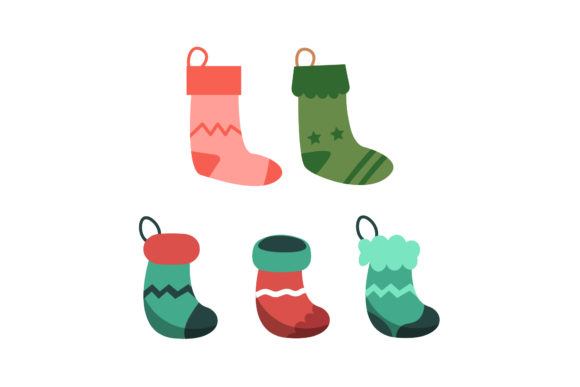
Christmas Socks Illustrations Set: A Designer Review
As a designer who has spent years navigating the gap between digital concepts and physical stitched reality, I approach every new asset with a critical eye. When I first opened the Christmas Socks Illustrations Set, my immediate goal was to determine if this graphic could survive the transition from a high-resolution screen to a textured fabric surface. The set arrives as a collection of Graphics designed for versatility, but in our line of work, versatility is only valuable if the execution holds up under scrutiny. This review breaks down how these illustrations perform when applied to real-world embroidery projects, from custom apparel to boutique holiday merchandise.
First Impressions: Visual Weight and Holiday Mood
The initial visual impact of the Christmas Socks Illustrations Set is warm and inviting. The mood strikes a balance between whimsical charm and classic holiday aesthetics, which is exactly what we look for when creating seasonal collections. The layout suggests a focus on bold shapes rather than microscopic details, a crucial factor for any machine embroidery design. In the world of Illustrations, fine lines often get lost during digitization or stitching, but here, the primary forms appear robust enough to maintain their integrity even after being converted into a stitch file.
For an Etsy seller or a small shop owner preparing for the rush of December, the ability to quickly identify a design that "reads" well at a distance is vital. These socks illustrations have a strong visual personality. They do not rely on subtle gradients that might turn muddy with thread; instead, they use distinct blocks of color and clear outlines. This makes them ideal candidates for custom apparel where the customer needs to recognize the motif instantly, whether it is on a sweatshirt hanging in a window display or a tote bag being carried through a crowded market.
Real-World Application: From Screen to Stitch
To truly test the potential of the Christmas Socks Illustrations Set, I imagined a specific scenario: producing a limited run of personalized holiday gifts for a local boutique. The plan was to create embroidered patches featuring these designs to be attached to denim jackets and canvas aprons. The canvas size provided in the source files, listed as 1920 px by 1280 px across various formats like AI, EPS, SVG, DXF, JPG, and PNG, offers a high starting resolution. However, resolution is just one part of the equation. The real test lies in how the vector paths translate into stitch density.
When working with sweatshirt embroidery, fabric texture can sometimes swallow delicate details. The sock illustrations in this set seem well-suited for this challenge because their forms are relatively solid. If I were to digitize these for a fill stitch application on a heavy cotton blend, the risk of puckering would be lower compared to a design filled with intricate lace-like patterns. For baby embroidery, such as decorating a onesie or a nursery blanket, the rounded edges and cheerful theme of the socks fit perfectly. Parents love soft, recognizable imagery, and these graphics deliver that without looking cluttered.
Consider also the application on a tote bag design. Canvas is forgiving, but it requires a design that stands out against the weave. The bold nature of the Christmas Socks Illustrations Set ensures that even with standard polyester threads, the image will pop. For the craft business owner, this reliability means less time troubleshooting failed stitches and more time fulfilling orders. Whether you are creating a personalized gift for a family member or a batch of items for a craft fair, the consistency of the design helps maintain a professional look across all finished products.
Navigating Challenges: Where Caution is Required
While the Christmas Socks Illustrations Set shows great promise, no design is universally perfect for every situation. As experienced designers know, context is everything. There are specific scenarios where these illustrations require careful handling. First, consider the hoop size. While the digital files are large, the actual stitch area must fit within your machine's constraints. If you attempt to scale these designs too small for a cap or a tiny baby hat, the definition of the socks may blur, turning distinct toes and cuffs into indistinct blobs of thread.
Another critical consideration is the choice of fabric texture. On very thin or stretchy fabrics, such as jersey knit, dense areas of the design could cause significant distortion. It is essential to use the proper stabilizer to support the weight of the thread. If you are applying this embroidery file to dark fabric, the contrast of the thread colors becomes paramount. The original Illustrations likely feature bright whites and reds, which will shine on navy or black backgrounds, but you must ensure the digitization includes adequate underlay to prevent the dark fabric from showing through lighter thread sections.
Furthermore, while the set is excellent for flat surfaces like pillow covers or tea towels, curved surfaces present a unique challenge. Embroidering on a cap requires adjusting the stitch angles to follow the curve of the brim. The geometric simplicity of the socks helps here, but complex corners in the design might need manual adjustment in your embroidery software to prevent birdnesting or skipped stitches. Always remember that a beautiful digital product does not automatically guarantee a flawless finished product without technical intervention.
Strategic Design Notes for Professional Results
Before committing to a production run using the Christmas Socks Illustrations Set, I strongly advise following a rigorous testing protocol. Start by creating a printable mockup to visualize how the design sits on your intended product. Then, move to the machine. Test the design on scrap fabric that matches the final material in weight and texture. Check the thread colors for vibrancy and ensure the running stitch outlines are secure. Inspect small details closely; if the socks have tiny bells or ribbons, verify that these elements are not too small to stitch cleanly.
For those selling these as commercial embroidery assets or finished goods, licensing is a non-negotiable step. The product description mentions availability in six format types, including vector files like AI and EPS, which suggests flexibility for scaling. However, you must confirm the license terms before selling finished items or offering the files as digital embroidery file downloads. Ensure you have the right to use the design for small shop product lines or larger commercial ventures.
Finally, think about the long-term value of your work. A well-executed embroidered patch using these illustrations adds perceived value to a garment. Customers trust handmade products that show attention to detail. By taking the time to properly prepare the Christmas Socks Illustrations Set—checking stitch counts, adjusting densities, and selecting the right backing—you elevate a simple graphic into a premium brand asset. This set offers a solid foundation for holiday creativity, provided you apply the same level of craftsmanship to the stitching process as the artist did to the original drawing.